When You Can’t Stop Wondering if You’re in the Right Relationship

Why Self-Trust Matters in Relationship OCD
In my last blog, I discussed relationship OCD (ROCD) and how a lack of self-trust often contributes to ROCD. This can look like not trusting your intentions or desires in your relationship, not trusting your own memory, and not trusting your ability to handle your relationship ending. A lot of times, underneath the obsessions and compulsions is a fear that you won’t be able to cope if your fear comes true. For example, your relationship not working out or not being able to be in a relationship at all. Yes, both of these things would be so hard. But with OCD, we often doubt our ability to handle hard things.
In OCD therapy for ROCD, I help people gain the confidence and trust that they could cope if their fear came true. What usually happens when we have more self-trust and self-confidence is that our OCD becomes more manageable. In other words, we start being less scared and more present in our relationships.
When the Fear Isn’t About Coping-It’s About Not Wanting the Pain
But sometimes we trust that we could handle our fear coming true-we know that it would be hard if our relationship ended, or even if all of our relationships ended because of our OCD, but we know we could cope. We just don’t want to. We don’t want to have to deal with the relentless doubting of our relationship or possible heartbreak. And because we don’t want to deal with that, we start becoming hyperaware of any inclination that this could be the “wrong” relationship. The problem is that once your brain decides it needs certainty, every normal doubt, annoyance, or moment of disconnection starts feeling like evidence that something is wrong.
Here’s where the overanalyzing of your partner and the relationship comes in, or what I often hear my clients describe as “nitpicking.” You don’t want to deal with breaking up or not being able to be in a relationship because of your OCD, and of course you don’t. That is painful. So, it’s almost as if your OCD is trying to protect you from that happening by having you analyze everything in your relationship. But this self-defense mechanism has become a problem. Why? Because ROCD can become all-consuming, and you can start doubting everything about your partner, yourself as a partner, and the future of your relationship.
Accepting the Risk of Heartbreak
So what do I tell clients when they say they realize they could cope with hard things but they don’t want to? I remind them that, unfortunately, we don’t have a choice about being at risk of experiencing hard emotions and situations we don’t want to deal with. Acceptance does not mean wanting your relationship to end or giving up on it. It means acknowledging that, no matter how thoughtful and intentional you are, you cannot completely eliminate the possibility of heartbreak.
No matter how careful and deliberate we are in choosing our partner, we are still at risk of the relationship ending for any number of reasons. This is not to say that I don’t encourage the people I work with to be selective and careful about who they choose to build a life with. Quite the opposite, actually. I think it is extremely helpful to consider your dealbreakers and what you want in a life partner to help you form a long-lasting partnership, and I encourage my clients to explore these things when choosing a partner.
But even then, no matter what we do or how much we analyze or engage in other compulsions-checking for attraction, researching relationships, seeking reassurance from others, confessing to your partner-there will always be a risk that this relationship won’t work out or that none of your relationships will work out. And you don’t want to have to deal with that. But we are always vulnerable in our relationships to difficult things like heartbreak, just as we are vulnerable to difficult things in life.

Flexibility Instead of Certainty
So what I do as an OCD therapist is help my clients develop an attitude of flexibility and acceptance. For instance, yes, certain choices will help you have a happy life. For example, being careful about choosing your life partner, but when we have OCD, we can become too rigid in how we think about being careful. We can think that being intentional and careful in our relationship means doing everything possible to eliminate any risk of getting hurt or hurting someone else. I help people learn to be more flexible in how they conceptualize being careful in their relationship so that they can stay loyal to their values and what they want in a relationship while accepting that, by being in a relationship, they may experience trials and tribulations they don’t want to experience.
This is the nature of life: there are no risk-free choices, there are no perfect choices, and we never know how things are going to turn out. Being human means being vulnerable to experiencing things we don’t want to experience, like pain and heartbreak. In OCD therapy for ROCD, we learn how to accept this part of life. And by accepting this hard truth, we paradoxically become more present and better able to enjoy our relationships and our lives.
A Helpful Resource for Relationship OCD
Want to learn more? Interested in learning how to become more flexible and accepting? I would love to hear from you.
A helpful resource that can help you navigate ROCD is this book:
Relationship OCD: A CBT-Based Guide to Move Beyond Obsessive Doubt, Anxiety, and Fear of Commitment in Romantic Relationships
by Sheva Rajaee

Relationship OCD Therapy in Boston, MA & San Diego, CA
Jen Lescher, LCSW provides therapy for Relationship OCD (ROCD), OCD, anxiety, intrusive thoughts, rumination, and related concerns for adults in Boston, MA, San Diego, CA, and throughout California and Massachusetts via telehealth.
Using evidence-based approaches such as Exposure and Response Prevention (ERP), Inference-Based CBT (ICBT), mindfulness-based interventions, and other effective OCD treatments, I help clients reduce compulsions, build self-trust, and develop a healthier relationship with uncertainty.
Ready to Approach Relationship OCD Differently?
Learning to respond differently to ROCD is not about forcing yourself to stay in a relationship or convincing yourself that everything is perfect. It’s about developing more trust in yourself, more flexibility in the face of uncertainty, and more freedom to be present in your life and relationships.
If you recognize yourself in these patterns, consider taking a few small steps:
- Reach out for support from a therapist who specializes in OCD and understands how relationship doubt can become obsessive.
- Explore my blog posts for additional insights into OCD, relationship anxiety and more.
- Therapy can help you step out of the OCD cycle and reconnect with what matters most to you.
Additional Services Offered in Boston, MA & San Diego, CA
Along with one-on-one OCD therapy, I also offer supportive resources that address challenges many clients face outside of sessions. On the Common subtypes page, you can explore detailed insights into recurring thoughts and behaviors. The relationships page offers guidance for managing friendships, dating, and relationships while living with OCD and anxiety.
About OCD Therapist Jen:
Hi, I’m Jen.
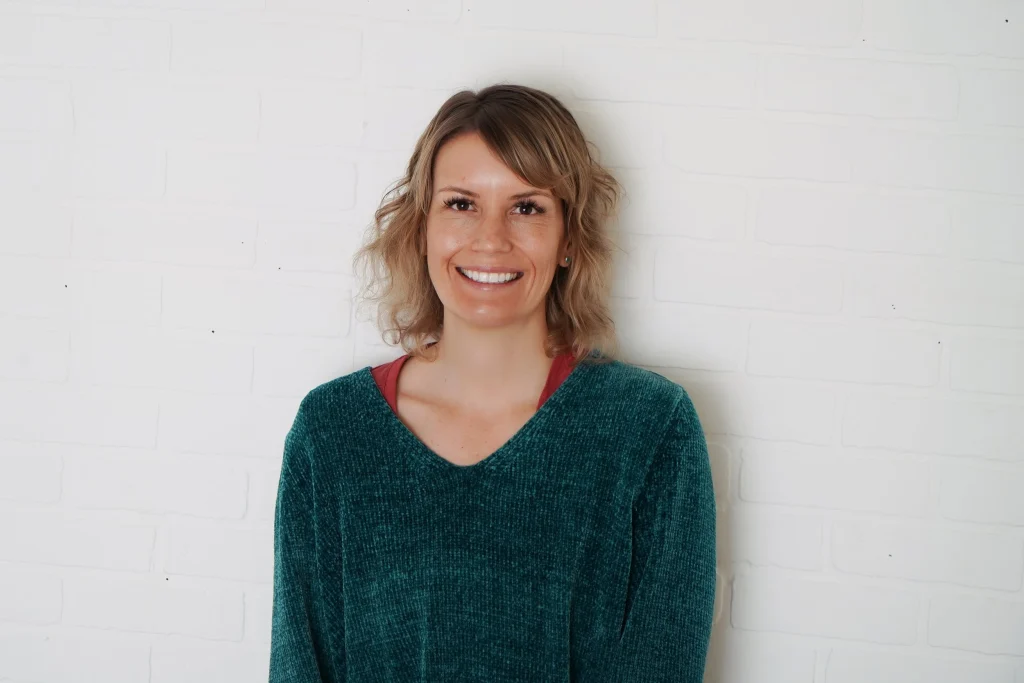
I’m a therapist, coffee enthusiast (honestly, it’s my favorite time of the day), and a big believer in finding small moments of presence-whether that’s through mindfulness, photography, or a quiet walk with my camera in hand. Photography helps me stay grounded and see the world with a little more curiosity, and that same mindset shows up in my work with clients. I’ve been drawn to spirituality and healing work since I was a teenager, exploring everything from meditation to energy practices. But I’m also someone who loves blasting music in the car and getting lost in a true crime podcast. I think healing can include both stillness and movement, reflection and laughter. Therapy should have room for all of that. Since 2007, I’ve worked in a range of mental health settings, which taught me that healing isn’t one-size-fits-all. It’s personal, evolving, and sometimes messy-but always possible.
Training & Background:
Inference-Based CBT (ICBT) for OCD – The OCD Training School & The Cognitive Behavioral Institute
Certified in Exposure and Response Prevention (ERP) – The Cognitive Behavioral Institute
Gottman Method Couples Therapy – Level 1
Master’s in Social Work – Portland State University, 2012