What Working With an OCD Therapist Is Really Like
When I have intro calls with potential clients, which are free 15-minute calls that I provide to people who are interested in seeing if we could be a good fit for therapy, many people ask me what a typical OCD therapy session looks like. It makes sense that potential clients want to know what to expect when coming to OCD therapy or what OCD treatment looks like in a psychotherapy setting.

What I often tell folks is that everyone is different, and I can’t predict exactly what will happen in sessions because OCD is unpredictable. Not only is OCD unpredictable, but so is being human, with all of our nuances, traumas, and socioeconomic factors that contribute to how we show up to therapy, which also shapes the therapeutic process. All that being said, there are certain things I do tell clients to prepare them for OCD therapy because there are a few commonalities.
OCD Therapy Is Different Than Traditional Talk Therapy
First, OCD therapy differs from traditional talk therapy. Whether we use ERP, ACT, and/or ICBT (modalities I am trained in that are evidence-based treatments for OCD), OCD therapy is a lot about teaching how OCD works and teaching skills to manage OCD. I find it extremely important for my clients to understand the OCD cycle and the tricks the mind plays that contribute to OCD. The idea is that people really need to understand how OCD works in order to stop falling for it, and so OCD therapy can feel a bit more focused and educational than other types of therapy.
OCD Treatment Is Action-Oriented
The other thing I tell people is that OCD therapy in San Diego, CA is very action-based. Meaning I am going to teach you different skills to manage your OCD, and then it’s about utilizing and practicing those skills in session and outside of session. Yes, there is homework with OCD therapy, and most of the practicing and using these skills takes place between sessions.
Then, in sessions, we explore what helped. But also what barriers you might have experienced while utilizing what you learned between sessions. And there will be barriers. There will be hard days. There will also be better days. Recovery from OCD is not linear. In OCD therapy, I help people as they travel this rocky road and remind them that a hard day does not mean all is lost. In fact, these hard days are expected as you learn how to change your relationship with anxiety, uncertainty, and, in general, your mind.
Why OCD Work Can Feel So Challenging
This leads me to another point I like to tell people: OCD therapy is hard work. It might be some of the hardest work you have ever done. This is because we are going to examine the things that scare you, that give you the most anxiety, and these things are very emotionally charged and often multifaceted. Meaning they could be linked to trauma or other difficult experiences you’ve had in your life. For example, I work a lot with relationship OCD, and relationship OCD often overlaps with attachment injuries. Attachment injuries are wounds you have from other relationships, whether those are from past romantic relationships or from your childhood caregivers.
When the Familiar Feels Safer than Change
OCD therapy is also hard because we are going to challenge how you have been handling these fears and anxieties. This means we have to change how we think and how we behave when these fears come up, and change is hard. Changing patterns is hard, even when that change is good for you. The mind doesn’t like things that are unknown because it wants to keep you safe, and what is unknown can feel unsafe. The mind isn’t sure you can survive a new way of being, but it knows you can survive an OCD pattern because you’ve done it so many times.
If you’re here reading this blog, though, chances are you’re realizing that engaging with OCD, and not changing how you relate to fear, has gotten out of hand. You’re probably realizing that this pattern is actually much harder than changing and that you need to find a different way to cope with anxiety and uncertainty.
OCD Therapy in Boston, MA and San Diego, CA
If you’re looking for OCD therapy in Boston, MA or San Diego, CA, I offer specialized counseling for adults struggling with OCD, anxiety, intrusive thoughts, and compulsive behaviors. I work with many different OCD themes, including health OCD, harm OCD, moral scrupulosity, contamination fears, and persistent rumination.
One of the things I help people understand is that OCD is often much more than the thoughts themselves. Over time, OCD can impact your confidence, your ability to trust yourself, your relationships, and your sense of freedom in everyday life. Working with an OCD therapist is a space to slow down, understand how OCD is operating in your life, and begin practicing new ways of responding so that fear and uncertainty no longer run the show.
Through my practice, Jen Lescher, LCSW, I provide online OCD counseling for clients throughout Boston, Massachusetts, San Diego, California, and surrounding areas. My goal is to help people spend less time battling with their thoughts and more time engaging with the people, activities, and values that matter most to them.

Building Confidence and Self-Trust Through OCD Therapy
So, yes, OCD therapy is hard. But being stuck in OCD cycles and having patterns of avoiding fear and anxiety is actually much harder and more painful in the long run. When OCD has run its course long enough, this is usually what we come to realize.
In OCD therapy at Jen Lescher LCSW, you can expect your OCD to be challenged, but we go slowly and strategically so you can build confidence and self-trust along the way. One of the things that often begins to organically emerge during treatment is a sense of confidence that you can tolerate and handle difficult emotions and circumstances. If this blog resonated with you as you were reading, I invite you to reach out to me by following these steps:
- You can email me at [email protected] to book a free intro call.
- If you’re not quite ready to reach out yet, you can also explore my blog for more information about OCD, rumination, relationship anxiety, ROCD, and other topics related to OCD and anxiety.
- Learn how to practice new ways of responding and build skills for approaching fear, anxiety, and uncertainty differently with OCD therapy.
Additional Resources to Support Your Journey
In addition to personalized OCD therapy, I provide resources to help you bring what you’re learning in sessions into everyday life. The Common OCD subtypes page explores the intrusive thoughts and behaviors many people experience. The relationship page focuses on how OCD can affect friendships, dating, and relationships, sharing practical strategies to strengthen connections and build confidence while managing symptoms.
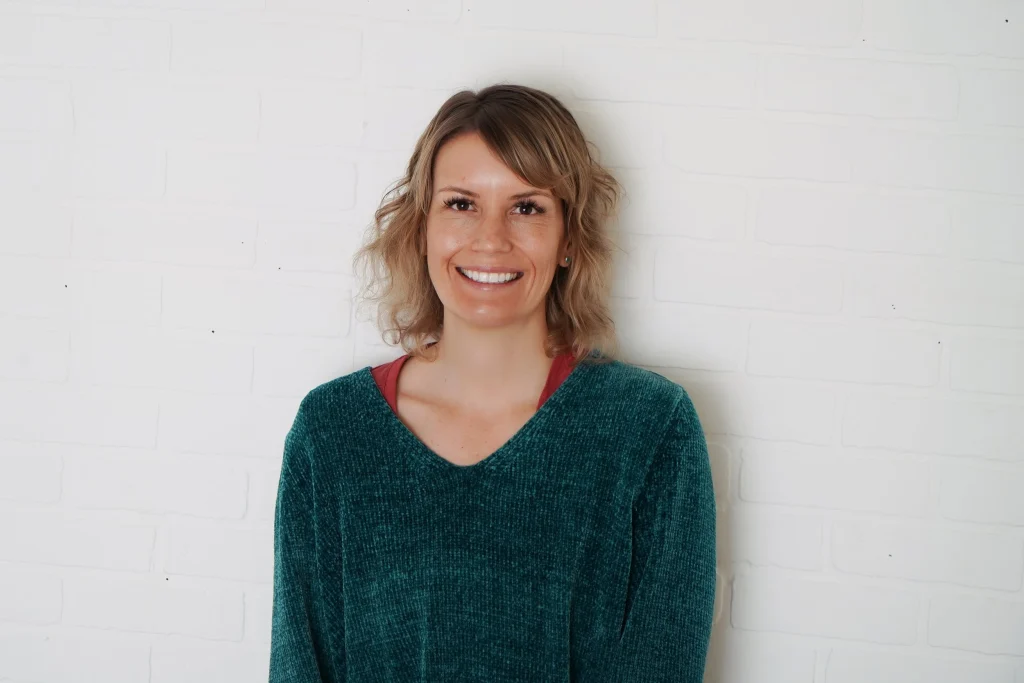
About the Author Jen Lescher
I’m a therapist, a devoted coffee lover (truly one of my favorite daily comforts), and someone who really values small moments of presence. That might look like slowing down with mindfulness, getting lost behind my camera, or taking a quiet walk just to notice what’s around me. Photography, in particular, helps me stay grounded and curious-two qualities I bring into my work with clients as well.
I’ve been interested in healing and spirituality since my teenage years and have explored many paths along the way, from meditation to energy-based practices. At the same time, I’m just as likely to be blasting music in the car or deep into a true crime podcast. To me, healing isn’t only about stillness or insight-it can also include movement, humor, and moments of joy. Therapy should have space for all of that.
I’ve worked in a wide range of mental health settings since 2007, and that experience shaped one of my core beliefs: healing is never one-size-fits-all. It’s personal. It changes over time. It can feel messy. And it’s always possible.
Training & Background
- Inference-Based CBT (ICBT) for OCD – The OCD Training School & The Cognitive Behavioral Institute
- Certified in Exposure and Response Prevention (ERP) – The Cognitive Behavioral Institute
- Gottman Method Couples Therapy – Level 1
- Master’s in Social Work – Portland State University, 2012